

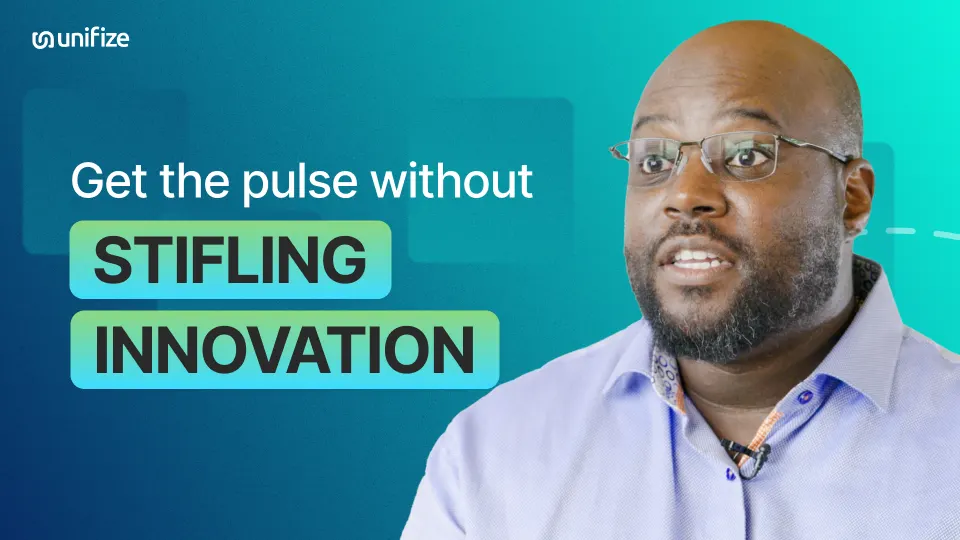
How quality leaders can get the pulse of their organization without stifling innovation
Denis Machoka · Harmonic Bionics
Harmonic Bionics
Denis Machoka redefines the concept of 'quality', highlighting its role in transformation and enablement, rather than mere control. He underscores the need for effective systems that aggregate organizational information, emphasizing the importance of addressing non-conformances, failures, and supplier issues promptly to maintain high standards.
Transcript
- 0:00
I think the idea of quality is a little misconstrued in a sense that it's more about control, quality control. But quality is really about transforming and enabling. You know, quality is a component of enabling a company achieve its goals.
- 0:18
And those goals can be as simple as producing your product in the best way possible, addressing those issues that you may have and also being aware of issues that may be dragging behind or what the sentiment is of the organization. All that information has to be captured somewhere. Excel sheets are probably not a good way of doing it.
- 0:38
And so you have to come up with a system that allows for that information to be aggregated in a way that makes sense for you to make those decisions. If your Non-Conformance is not being resolved, customer is not going to be happy if your failures are not being informed or they are not being addressed, something is not going to go correctly.
- 0:58
If your supplier has issues and you're not informed on time, you want to have an alternate supplier in place. If your suppliers are not qualified, you may not know that that needs to happen. And so when you have an integrated system that speaks to itself and is giving you all this data, you literally have the pulse of the organization in your hands as an executive at Harmonic Bionics that’s what I had by using Unifize, I literally had the pulse of the quality organization in my hand. I knew what was happening when it was happening and who it was happening almost instantaneously. Now that's powerful for an executive. You able to make those decisions fast. You're able to also influence those decisions. Executives who lack influence. That's all we have is influence.
- 1:46
So how is the best way to influence a person then 2 minutes after they ask a question, 5 minutes after they say, Hey, we have a problem, you know, you want to influence immediately, instantaneously, almost to the point, and that collaboration becomes less of a senior member, junior member, it becomes an us team, and that is a culture that we built, which is it's an us team.
More from the same world.
The nearest stories first: the same company, then the same industry. Browse them all.
 2:32How Unifize's no-code configuration speeds up implementationClarissa ArcherHarmonic Bionics
 3:23Enabling Supplier Quality on UnifizeClarissa ArcherHarmonic Bionics
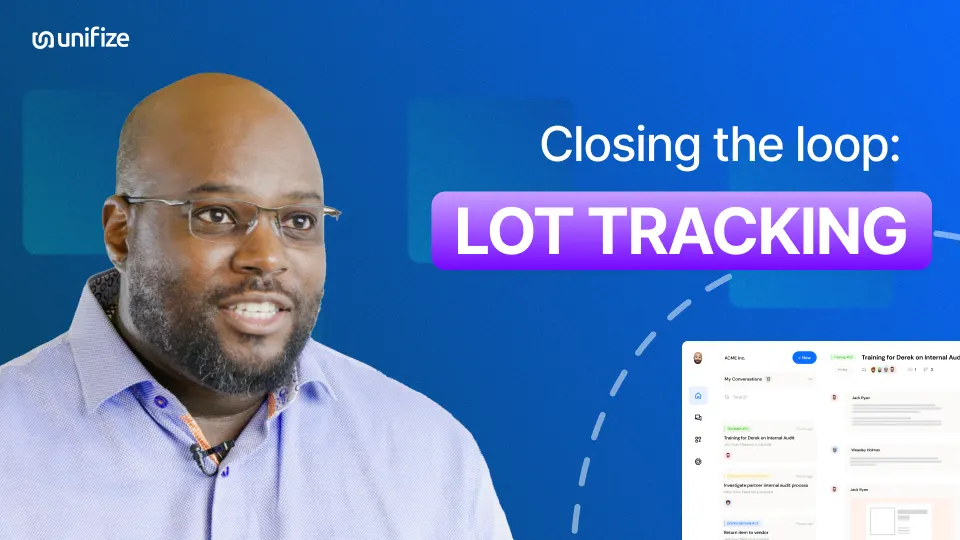 1:36Closing the loop: traceability and lot tracking using UnifizeDenis MachokaHarmonic Bionics
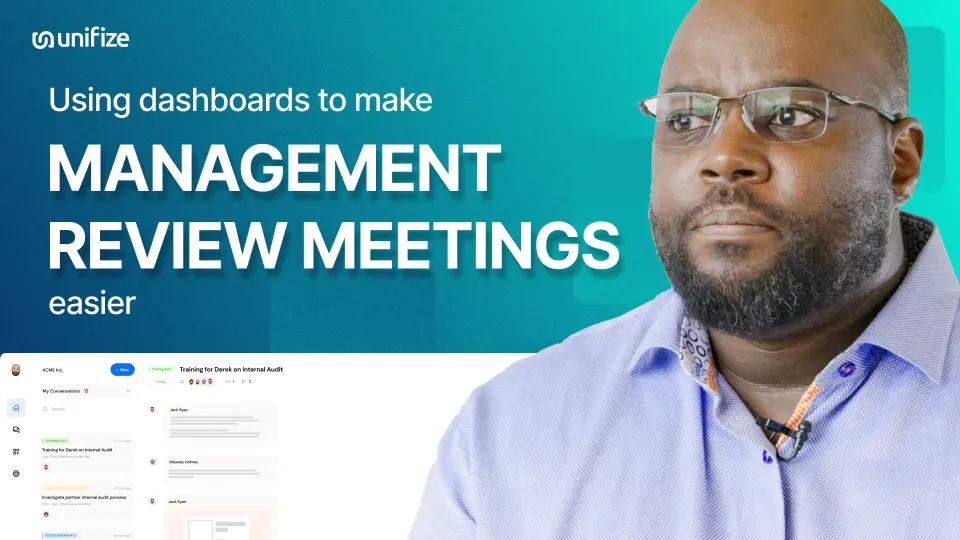 1:32Using dashboards on Unifize to make management review meetings easierDenis MachokaHarmonic Bionics

Your team has a story like this waiting.
Bring the process that hurts most. We will run it on Unifize, live, on your own work.