
Cited the audit-trail gap on the LIMS from the internal audit.
Linked to IA-2026-04 · LIMS v7.2
Solutions · Compliance
You can prove compliance today.Ask again tomorrow.
Validation, data integrity, safety and regulatory change are governed in briefs and spreadsheets beside the quality system. Unifize keeps the decision trace, so the answer holds the next time someone asks.
Audit-trail gap cited in the finding
Runs wherever compliance is inspected
If compliance signs it, it has a home here.
The obligations a compliance function actually carries, as governed workflows: named owners, evidence bound to the decision, a close that survives an inspection.
Systems, data and the validated state
Prove the systems and the data behind every record you sign.
- Validation and Qualification
- Data Integrity, Access Control and E-Signature Governance
Inspections and changing rules
Getting inspected, answering findings, and keeping up as the rules move.
- Audit Readiness and Response
- Regulatory Change Management
- Cross-Border Regulatory Compliance
- Contract Review
Safety, environment and waste
Keeping people safe and the site inside its permits.
- Environmental Health and Safety Compliance
- Environmental Monitoring and Facility Control
- Waste Management and Controlled Destruction
Once product leaves the site
Obligations that follow the product past your own walls.
- Batch Record Review and Release
- Contract Manufacturing and CMO/CDMO Governance
- Adverse Event Reporting and Regulatory Notification
- Field Action Effectiveness Monitoring and Close-Out
The obligation gets met. The proof goes stale.
The failure modes we see inside compliance and EHS functions. None of them is a missing feature. All of them are obligations governed outside the record.
- Compliance posture answer assembled per question, never queryableRight for the question asked. Stale by the next one.
- Regulatory change horizon scanning not linked to operating documentsThe rule changed in the brief. The procedures never heard.
- EHS audit findings tracked in spreadsheets parallel to QMSTwo trackers, two audits, and nobody sees the repeat.
The posture, rebuilt for every question asked. That rebuild is the coordination tax.
Measure your coordination tax →Run the finding where the decisions happen.
Most systems record that a data integrity gap was closed. Unifize holds the remediation itself, so the impact call, the access decisions and the revalidation seal into a trace an inspector can replay.
Documents and findings, on one record.
Controlled documents, changes and training run in the Document Management System; audits and corrective actions run in the Quality Management System. Both write to one governed record.
- Explore the product →
Document Management System
The controlled record: procedures, revisions and the training each revision triggers, with Part 11 signature where it is required.
- Explore the product →
Quality Management System
Where findings land: audits scheduled and answered, corrective actions verified before anything closes.
It sits on the stack you already validated.
Keep the systems that already passed inspection. Unifize runs the obligations around them, and the approved outcome goes back with a 21 CFR Part 11 signature. No rip-and-replace, and no revalidation of a system that already passed.
Proof, to the standard you'd hold us to.
A signed baseline, labelled as what it measures, plus the named regulated manufacturers running these records on Unifize.
- Customer-attested · medical devices41%lower non-conformance coordination cost, measured in year oneMedical-device manufacturer$81,350 a year recovered against a signed $198,150 baselineSigned baseline, anonymized
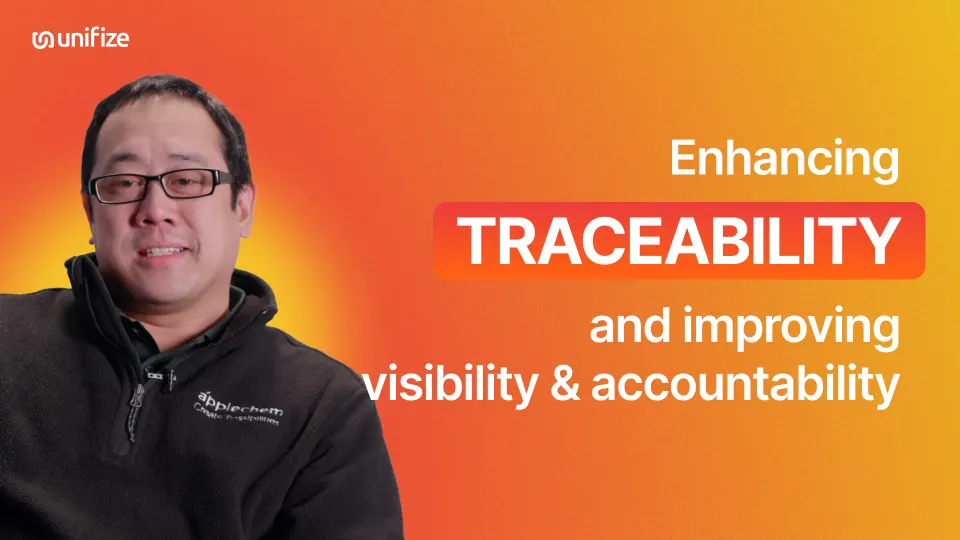 ApplechemWilson LinEvery open action has an owner, a due date and reminders
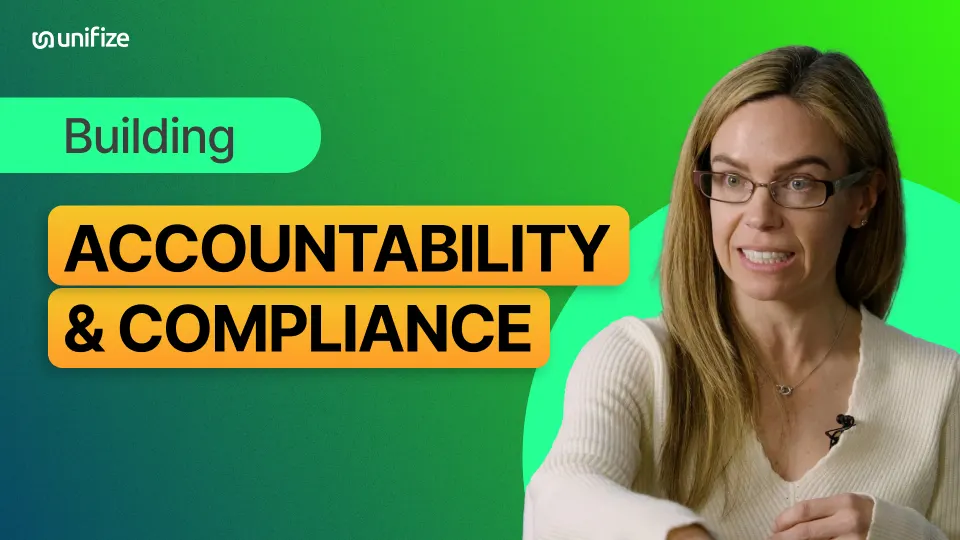 Natalie JonesNutritional SupplementsEvery change documented, with access by specific users
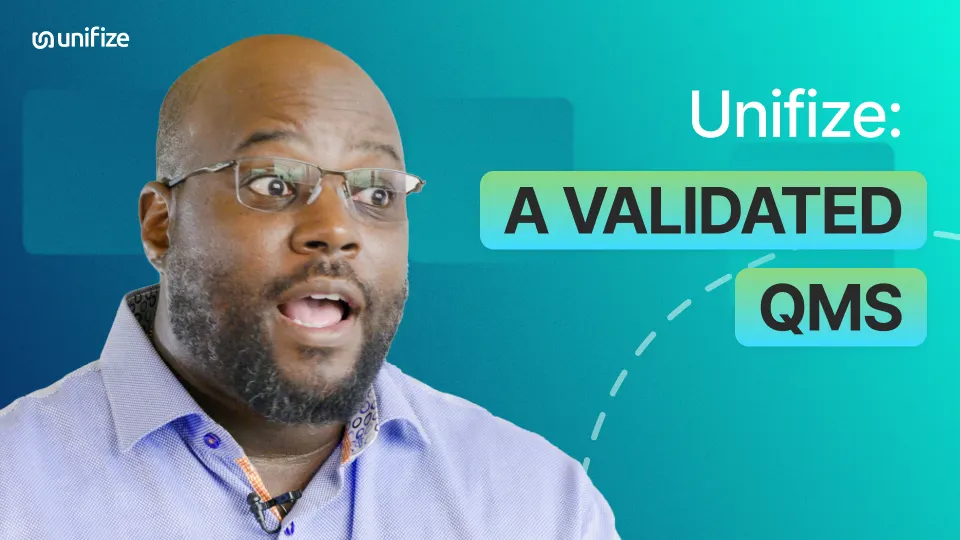 Harmonic BionicsDenis MachokaComes validated, with the validation package provided
 Biovation LabsJesse Kolstad, Director of QualityDigital sign-offs that notify each approver at their turn
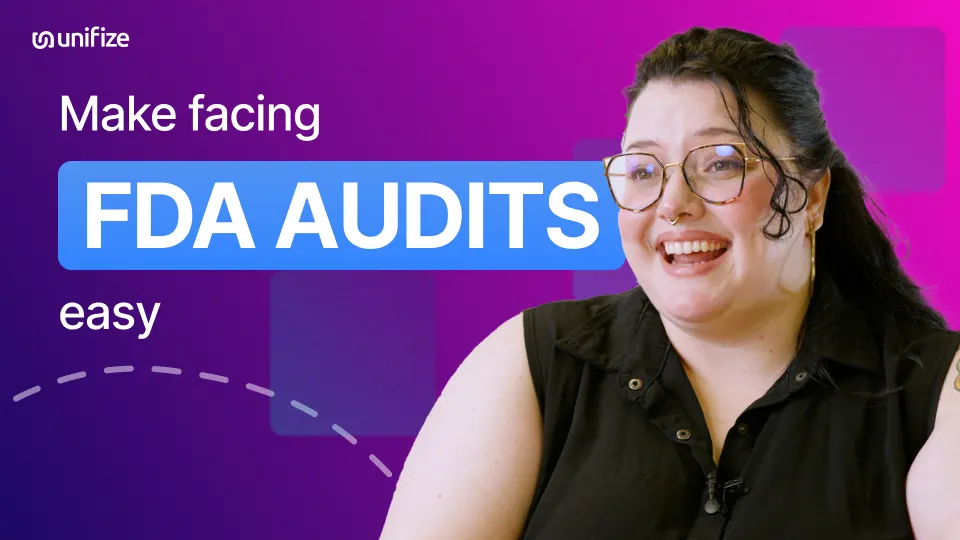 Harmonic BionicsClarissa ArcherFDA questions answered from the audit trail and its history
 ApplechemWilson LinAudit requests: 30 minutes of searching now a few minutes
When compliance becomes the headline.
Each of these starts a clock, and each routes into a governed workflow, so the response is coordinated on the record it will be judged by.
Data integrity finding
Routes to Document Control · Corrective Actions · owned by Quality Compliance · IT
CSV audit finding
Routes to Change Control · Audit Management · owned by Validation Manager · CSV Lead
OSHA Process Safety Management gap
Routes to EHS Audit Management · owned by EHS Director · Engineering

Answer once. Keep the answer.
Bring one obligation, a validation finding, an audit response or a regulatory change, and see the decision trace on your own work in a 30-minute walkthrough.