

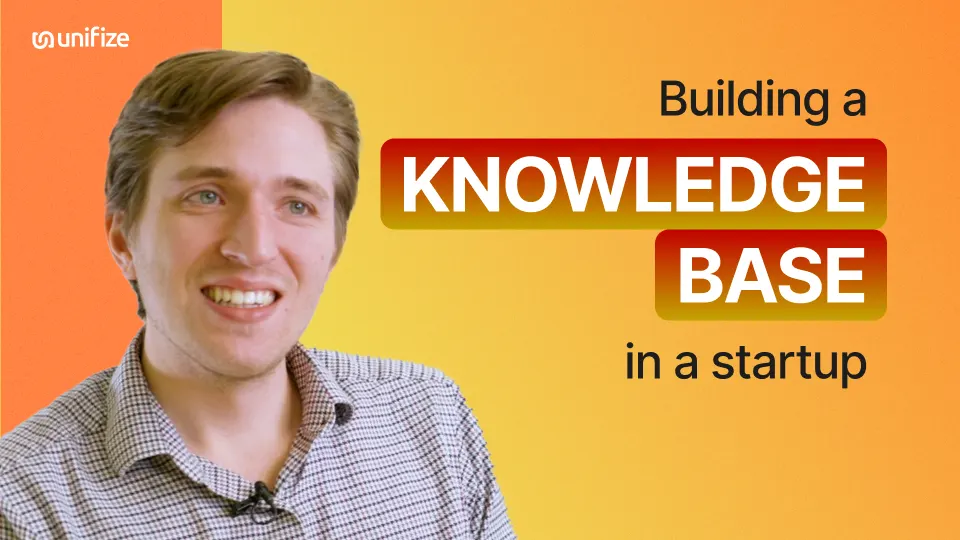
Building a knowledge base in a startup with Unifize
Michael Hogan · Mechanical Engineer · Harmonic Bionics
Harmonic Bionics
Michael reflects on the unique dynamics of working in a small company, emphasizing the value of relationships with colleagues, suppliers, and clients. He contrasts the human-centric approaches of startups with the rigidity of large corporations, highlighting the balance between personal connections and structured workflows.
Transcript
- 0:00
The thing about working at a small company is that it's the you know, it's about relationships, both with your coworkers, but with your suppliers, with your customers.
- 0:14
Right. When you have your people, the importance of people over systems becomes much more important. There's always there's always that balance, right? You can work for these huge 80,000, 80,000 person companies like Raytheon, where you have a very clearly defined role. It's very rigidly boxed. You only know the information for your particular project that you need to know.
- 0:40
I mean, literally your design inputs don't tell you anything about what you're actually working on in some cases for for good reasons. At a startup, it is it is very much about, you know, what is my what is my working relationship with my quality engineer, what is my working relationship with my suppliers? Right. Because at the end of the day, for a small company they live and die on, on relationships.
- 1:07
As far as the that ties into compliance, I mean, the thing is that everybody has to hold everybody accountable, right? We don't have the overhead or the or the systems that accrue over time that a rigidly enforce a set of standards as determined by the company. Right. And, you know, regulations are written from, at least in my opinion, from the sense that if you're doing everything right, everything that you should be doing, if you're doing a good job, you know, you will be very close.
- 1:44
If not already compliant with most standards. There was very few gotchas I've seen there in a tripped up. But the key thing is, is that you need to communicate right? I don't have a walking corpus of, you know, ISO 60601 in my head, right? I can't know everything about it, but between all the people at this company we do.
- 2:07
And so being able to communicate clearly with each other and being able to have information in a way that's easily accessible, that is flexible processes, is it is the strategy that you need to maintain, Right? If you try to enforce a rigid system on a start, it's just not going to work. There's no way, right?
- 2:32
You you know, there are days where I'll put on more of a quality engineering hat and maybe I'll go audit suppliers.
- 2:40
There are days where, you know, in the old days I'd literally was building robots in back. I was the technician. So I think that, you know, tying it back to regulation and I guess to Unifize is that the system that we have with Unifize reflects the scale and size of our company and the fact that it's so adaptive and we've changed it several times over already as we've learned more how to use the system and as we grow as the company is, that's really, you know, what we need as a company
More from the same world.
The nearest stories first: the same company, then the same industry. Browse them all.
 2:32How Unifize's no-code configuration speeds up implementationClarissa ArcherHarmonic Bionics
 3:23Enabling Supplier Quality on UnifizeClarissa ArcherHarmonic Bionics
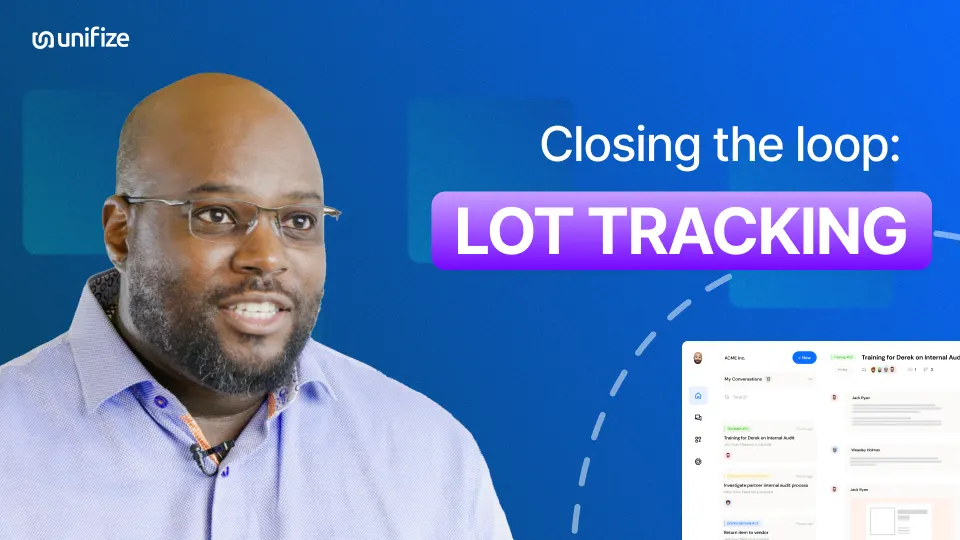 1:36Closing the loop: traceability and lot tracking using UnifizeDenis MachokaHarmonic Bionics
 1:32Using dashboards on Unifize to make management review meetings easierDenis MachokaHarmonic Bionics

Your team has a story like this waiting.
Bring the process that hurts most. We will run it on Unifize, live, on your own work.