From Complexity to Clarity: How Harmonic Bionics Transformed Quality with Unifize

 Download Case Study
From Complexity to Clarity: How Harmonic Bionics Transformed Quality with Unifize
Download Case Study
How do you scale fast and stay compliant in a regulated industry?
For early-stage medical device companies, the pressure to build compliant systems while accelerating toward market launch can be overwhelming. Harmonic Bionics—a robotics startup turned commercial manufacturer—found themselves navigating this exact challenge. As they transitioned from research roots to a full-scale medical device operation, they needed more than checklists and folders. They needed clarity, structure, and control—without slowing down innovation.
This case study dives into how Harmonic Bionics took ownership of their quality processes, stood up a compliant QMS in record time, and created a system that empowered both QA and engineering teams to collaborate without confusion.
Inside the case study, you'll discover:
- What challenges the team faced as they shifted from academic lab to FDA-regulated manufacturer
- Why traditional QMS platforms fell short—and how Unifize proved to be the right fit
- How they built compliant processes for document control, change management, and NC/CAPA tracking—without external consultants or IT-heavy systems
- What happened when quality conversations moved into the system, rather than around it
- Tangible results like reduced change approval cycles, faster audits, and smoother team onboarding
If you’re building a compliant, scalable QMS from the ground up—or trying to fix one that’s holding your team back—this story offers a clear example of how to do it smarter.
Overview
Building a compliant QMS is a big lift for any early-stage medical device company — and even more so when you’re racing toward market launch. Harmonic Bionics, a rehabilitation robotics company born out of a university research project, found themselves right in the middle of that challenge.
After raising funding and preparing for commercial growth, Harmonic Bionics needed to transition from a research-focused organization to a fully operational medical device manufacturer. While their R&D processes were already structured, commercialization brought new layers of complexity — from regulatory audits and design traceability to formalized controls under FDA 21 CFR Part 820 and ISO 13485.
Most traditional QMS tools felt like overkill: heavy to configure, slow to implement, and overly dependent on IT. What they needed instead was a system that could evolve with them — one that simplified compliance, supported cross-functional collaboration, and gave the QA team control without added friction.
That’s what brought them to Unifize.
About Harmonic Bionics
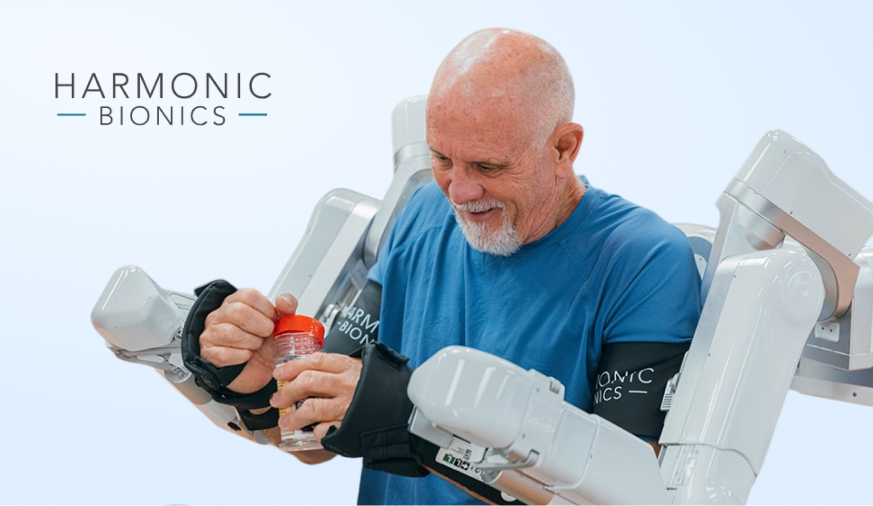
Harmonic Bionics is a commercial-stage medical device company based in Austin, Texas. Their flagship product, Harmony SHR, is a robotic rehabilitation platform designed to help people with upper-limb mobility challenges due to stroke, neurological disorders, or musculoskeletal conditions.
The Turning Point: Growing Pains of Scaling with Compliance
The challenges Harmonic Bionics faced weren’t theoretical — they were happening in real time, and the pressure was on. Here’s what their team was dealing with as they tried to scale:
1. From Research to Regulated
As a spinout from an academic lab, the company initially operated without the documentation rigor that regulated manufacturing requires. Once funding came in, everything had to shift: structured documentation, audit trails, approvals, and a controlled environment — fast.
2. Disconnected Documents and Approvals
Important files — specs, test protocols, training docs — were scattered across email threads, shared drives, and spreadsheets. Signatures had to be gathered manually, which meant delays, confusion, and sometimes even lost documents.
3. Change Control That Didn’t Scale
Even small changes to a procedure or product design triggered long approval chains with multiple handoffs. Engineers, QA, and project managers were often out of sync, and decisions dragged on far longer than they should have.
4. A Team Still Learning the Regs
Like many young startups, not everyone came from a medical device background. That meant QA carried the weight — not just managing compliance, but also training people and filling process gaps as they went.
5. No Central Source of Truth
As the team grew, so did the communication overhead. There was no single place to track approvals, changes, or conversations — and it was getting harder to tell who had the latest version or what the last decision actually was.
6. The Tool Search That Hit a Wall
They looked at several systems: MasterControl, ETQ, Greenlight Guru, SharePoint, even paper-based processes. But most felt too rigid or too complicated — requiring full-scale IT involvement or forcing their workflows into someone else’s mold.
The Solution: A QMS That Let QA Lead the Way
When Harmonic Bionics chose Unifize, their goal wasn’t just to roll out software — it was to take control of their quality processes from the inside out. Instead of relying on IT or external consultants, the QA team led the implementation themselves, configuring the platform to match the realities of a regulated medical device environment.
1. Mapped Core QMS Processes to Unifize
The QA team set up structured modules for managing Device Master Records (DMRs), Design History Files (DHFs), Document Control, and Change Management — aligning each with FDA 21 CFR Part 820 and ISO 13485 requirements. They structured Unifize to reflect their actual workflows, including:
- Review and approval of controlled documents
- Linking design inputs to verification and validation activities
- Structured documentation for manufacturing procedures, labeling, and packaging
This allowed them to track every change to device specifications and quality procedures with full process control from day one.
2. Embedded Quality Conversations into the System
The team shifted all quality-related communication — including reviews, clarifications, and approvals — directly into Unifize. They stopped relying on email, Slack, and ad-hoc conversations, and instead:
- Used Unifize comment threads tied to individual records
- Maintained a single communication trail within each document or change
- Ensured all decision-making was visible and tied to the data it impacted
This structure helped reduce miscommunication and improved accountability across stakeholders.
3. Designed and Deployed Change Control Workflows
The QA team implemented structured change control workflows that met 21 CFR Part 11 requirements. This included:
- Configuring user roles and permissions for initiators, reviewers, and approvers
- Setting up electronic signature protocols and audit trails
- Aligning workflows with how engineering and QA collaborated on product and process changes
Changes to device design, process instructions, test plans, and training records were routed through Unifize with predefined review paths — allowing them to standardize change control while retaining flexibility.
4. Centralized NC and CAPA Tracking
To replace spreadsheets and manual logs, QA created a dedicated space in Unifize for managing non-conformances and CAPAs. This included:
- Logging NCs tied to specific lots, devices, or production steps
- Linking CAPAs to root cause analyses and corrective actions
- Establishing a documented review cycle with clear ownership and due dates
By doing this, they created a single source for capturing quality events and responding to them in a structured, trackable way.
5. Enabled Training Through Real-World Context
Rather than rely solely on static SOPs, QA began using Unifize to onboard new team members. They:
- Shared live document workflows with new hires
- Used in-system comment histories to show how decisions were made
- Assigned reviewers and contributors roles early to build regulatory literacy
This approach made training faster and helped reinforce the company’s expectations around process and compliance through hands-on exposure.
Implementation Experience
- Rapid onboarding (2-3 calls and go-live)
- Minimal IT dependency
- QA-led system configuration and ownership
- Reduced back-and-forth with project managers and config teams
- Streamlined audits and documentation readiness
From Rollout to Results
Here’s what we helped the Harmonic Bionics team achieve with Unifize:
- Change Approvals in Days, Not Weeks
→ Engineers and QA could route, review, and approve changes in real time — with built-in compliance.
“Previously, it would take three weeks to implement a change… now it can take a couple of days.” - QA-Owned System Configuration
→ The team controlled their own workflows and structures. No external configurators required.
“Once QA drove it, it was easy to make the adjustments without needing somebody else. That was a huge shift for us.” - Audit-Ready From the Start
→ Every doc, every conversation, every signature — traceable and inspection-ready in minutes.
“I’m able to see the conversations, the latest feedback, and exactly what changed — all in one place. That’s invaluable during audits.” - Fast Team Adoption
→ Engineers picked it up quickly. No long training cycles. No resistance.
“The engineers really adopted it quickly. They saw we could still move fast — but do it in a compliant way.” - Full Regulatory Alignment
→ 21 CFR Part 11 compliance, ISO 13485 support, and clear traceability from design inputs to test results.
“It passes the sniff test, the predicate rule test, 21 CFR part 11… It’s a validated system.”
Conclusion: When the Right People Have the Right Tools
For Harmonic Bionics, this wasn’t just about rolling out software. It was about changing how quality got done — and who owned it.
With Unifize, QA could finally lead without friction. Engineers could collaborate without confusion. And the whole organization could move fast — without losing control.
In the end, quality stopped being a bottleneck. It became something everyone owned, understood, and respected. And that’s how Harmonic Bionics built a culture of compliance that moves at the pace of innovation.

